Grease Trap Cleaning Melbourne, North and West
Sims Liquid Waste provides grease trap cleaning across Melbourne's north and west, from Sunbury and Melton in to Moonee Ponds, Sunshine and Broadmeadows. We pump out traps for food businesses on the schedule in your trade waste agreement, and we're on call 24/7. Call Adam on 0438 226 572 to book.
- EPA Certified
- Family Run Since 1988
- 24 Hour Service
You Dump It, We Pump It.
Get a Free Quote Today
Commercial Grease Trap Cleaning Services
Any business that cooks, washes dishes or prepares food usually has a grease trap, and someone licensed has to empty it. We look after restaurants, cafes, takeaways, bakeries, pubs, clubs and function venues, hotels, childcare centres, aged care homes, schools, hospitals and food manufacturers. We also clean residential grease traps.
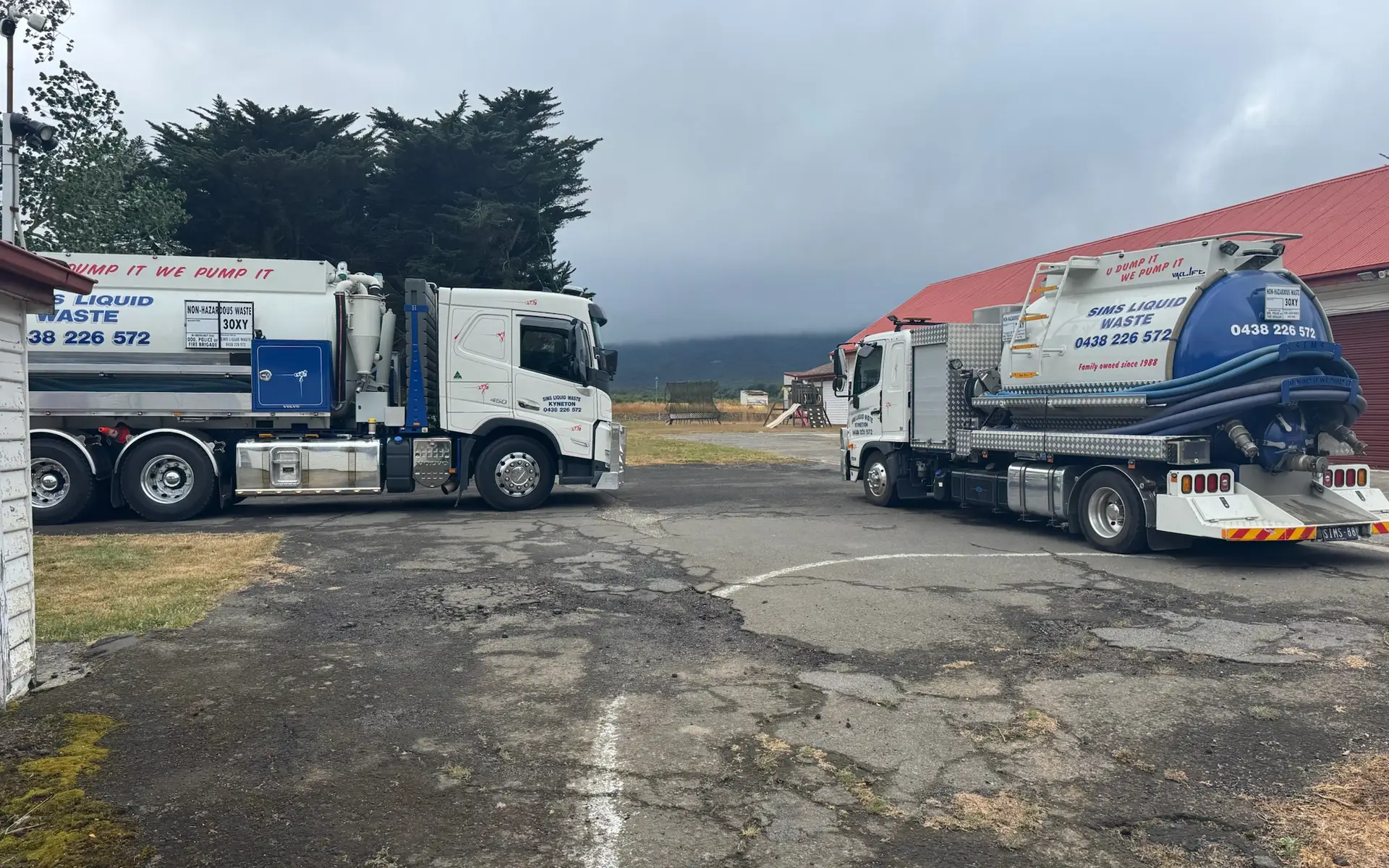
Our trucks come down the Calder Freeway from Kyneton, so the north-west and west of Melbourne are within easy reach. That covers the corridor from Sunbury, Melton and Caroline Springs, through Taylors Lakes, Tullamarine and Airport West, to Niddrie, Essendon, Moonee Ponds, Sunshine, Broadmeadows and Craigieburn.
Two water authorities set grease trap rules in this part of Melbourne, and they don’t do it the same way. We explain both below.
Every pump out comes with the record your water authority wants to see.
Get a Free Quote
We're ready to help you.
What Our Grease Trap Service Covers
- Full pump out of fat, water and solids
- Scheduled visits matched to your trade waste agreement
- One-off and emergency pump outs, 24/7
- Early, late and overnight work around trading
- Residential grease traps as well as commercial
- Triple interceptor cleaning
- Traps up to 12,000 litres in one visit
- EPA waste certificate with every pump out
Grease traps explained
A grease trap is a tank between your kitchen drains and the sewer that catches fats, oils and food solids before they reach the pipes. Waste water slows down inside the trap. Fat floats to the top, heavier solids sink to the bottom, and the cleaner water in the middle flows on to the sewer. Industry and water authorities often call it a grease arrestor or grease interceptor.
Water authorities insist on them because fat sets hard as it cools. In a sewer main it builds up like plaque in an artery, and eventually the pipe blocks and overflows. A trap only works while there’s room in it, which is why it has to be pumped out regularly.
Do you legally have to have a grease trap?
In most cases, yes, if you run a food business. Yarra Valley Water says every food business producing trade waste must install a grease trap, and discharging to sewer without a trade waste agreement is an offence under the Water Act 1989. Greater Western Water says food businesses need a trade waste consent and may need a grease trap before they start trading. The water authority decides the type and size.
Can you clean a grease trap yourself?
No. Yarra Valley Water says you must not empty a grease trap yourself, and only EPA approved waste transporters can do it. EPA Victoria classes grease trap waste as reportable priority waste. That means it has to be carried by a transporter with EPA permission and tracked in EPA’s Waste Tracker system.
Do plumbers clean grease traps?
Plumbers install them, but they don’t usually pump them out. Greater Western Water says only a licensed plumber may install a grease trap. The pump out itself is a job for an EPA licensed liquid waste collector with a vacuum truck, which is what we do.
What happens if you don’t clean a grease trap?
Once a trap is full, fat and food solids pass straight through into the sewer. You’ll usually notice smells and slow sinks first. Greater Western Water’s terms let it recover the cost of a sewer blockage from a business that hasn’t done the maintenance its trade waste consent requires.
What is the Australian Standard for grease traps?
Grease traps are plumbing, so their installation falls under the Australian plumbing standard. Coliban Water’s grease trap fact sheet, for example, says interceptors must be connected in accordance with AS 3500.2. In Melbourne, your water authority sets the size and the pump-out frequency through your agreement.
What gets rid of a grease trap smell?
A regular pump out. A strong smell from the trap or the floor waste usually means the fat layer is thick and the trap is overdue, so emptying it is the real fix.
Grease trap rules in Melbourne’s north and west
Greater Western Water sets the rules for most of the west and north-west, and Yarra Valley Water covers the north around Broadmeadows and Craigieburn. Tullamarine is split between the two, so check your water bill. Your council registers the food business, but the water authority decides whether you need a trap, how big it is and how often it’s pumped.
Greater Western Water
Greater Western Water covers Sunbury, Melton, Caroline Springs, Taylors Lakes, Airport West, Niddrie, Essendon, Moonee Ponds and Sunshine. It was formed in 2021 from City West Water and Western Water, so older council documents may still use those names.
- Frequency. Pump the trap at the frequency in your trade waste agreement. GWW says that’s typically every three months.
- Records. GWW wants a record of every pump out so it can be entered in its database. Its food business terms ask for the record within two weeks of the work. We notify GWW of each pump out for you, so there’s nothing for you to send.
- Access. You must keep the trap accessible at all times.
- Sizing. Trap size is based mainly on how much waste water goes down the drain each hour, and GWW’s trade waste team confirms it.
Yarra Valley Water
Yarra Valley Water covers Broadmeadows, Craigieburn, Greenvale and Mickleham.
- Who needs one. All food businesses producing trade waste must have a grease trap, and paying a fee instead isn’t an option.
- Frequency. It’s set in your trade waste agreement and reviewed at renewal. A busier kitchen or new menu can mean a larger trap or more frequent pump outs.
- Records. Keep your cleaning receipts and certificates. Inspectors can ask to see them.
- Transporter. Only EPA approved waste transporters may pump out the trap.
EPA Victoria and Waste Tracker
EPA rules sit on top of both authorities. Grease trap waste is reportable priority waste, so every load has to be tracked from your premises to an authorised facility. The business producing the waste has to choose a transporter who is allowed to carry it. Sims is EPA licensed to carry grease trap waste, and we look after the tracking for you.
Who we service
We clean grease traps for any business that generally needs one. In Melbourne’s north and west that’s mostly these.
- Restaurants, cafes and takeaways on shopping strips and in food courts
- Bakeries and pubs, where butter, batter and fryer oil load a trap quickly
- Clubs and function venues that cook for big crowds on set days
- Hotels and accommodation with kitchens running seven days
- Childcare centres, aged care homes, schools and hospitals with commercial kitchens
- Food manufacturers and catering kitchens in the industrial estates
We clean residential grease traps too. Some homes, especially with large kitchens or home businesses, have a small under-sink or in-ground trap.
Scheduled servicing and records
The easiest way to stay compliant is a fixed schedule that matches your trade waste agreement. Tell us the trap size and the frequency in your agreement, and we’ll put you on a repeating booking. If your trap fills faster than the agreement assumes, we’ll tell you, because an earlier pump out is cheaper than a blocked sewer.
After each visit you get an EPA waste certificate for your file. If you’re with Greater Western Water, we notify GWW of the pump out on your behalf, which takes one job off your list. If you’re with Yarra Valley Water, keep our certificates with your agreement, because its inspectors can ask to see your receipts.
What affects the cost of a grease trap pump out
Trap size and how often it’s emptied make the biggest difference. We don’t publish prices, because two kitchens of the same size can have very different traps. These are the main factors.
- Trap size in litres. A 600 litre under-floor trap is a smaller job than a large in-ground interceptor. We can empty traps of up to 12,000 litres in one visit.
- Service frequency. A trap on a regular schedule is quicker to empty than one with a thick, hardened fat cap.
- Access. Traps under floors, behind kitchens or down narrow lanes take longer to reach with the hose.
- Time of day. After-hours and emergency work costs more than a booked visit.
- Number of traps. Several traps at one site, or several sites on one run, can be done together.
Signs a grease trap is overdue
Bad smells, slow sinks and floor wastes that gurgle or bubble are the common signs. You might also see fat around the trap lid, water backing up into the kitchen, or a note from a water authority inspector. Any of these means the trap needs pumping now, not at the next scheduled visit.
We also clean triple interceptors, the three-chamber pits used at workshops and wash bays to separate oil and silt from waste water. EPA classes triple interceptor waste as reportable priority waste too, and Sims is EPA licensed to carry it.
Where we service
We cover twelve suburbs in Melbourne’s north and west, each with its own page.
- Grease trap cleaning in Sunbury. Evans Street takeaways, the town centre laneways and the winery and function venues around town.
- Grease trap cleaning in Melton. The High Street shops being upgraded by council and the Woodgrove food court in Melton West.
- Grease trap cleaning in Caroline Springs. CS Square and the hotel and function kitchens near Lake Caroline.
- Grease trap cleaning in Taylors Lakes. Watergardens and its two dining precincts, plus nearby Sydenham and Hillside.
- Grease trap cleaning in Tullamarine. Industrial estates, food manufacturers and 24/7 sites west of the freeway.
- Grease trap cleaning in Airport West. Food tenants at Westfield Airport West and the McNamara Avenue shops.
- Grease trap cleaning in Niddrie. The Keilor Road restaurant strip and its rear laneways.
- Grease trap cleaning in Essendon. North Essendon, Essendon Junction, Napier Street and Buckley Street.
- Grease trap cleaning in Moonee Ponds. The Puckle Street mall, Moonee Ponds Central and race day catering.
- Grease trap cleaning in Sunshine. Sunshine Marketplace, Hampshire Road and a busy multicultural food scene.
- Grease trap cleaning in Broadmeadows. Broadmeadows Central and the grill and charcoal chicken kitchens nearby.
- Grease trap cleaning in Craigieburn. Craigieburn Central, Highlands and new logistics estates.
Further out, we also look after Kyneton, Gisborne, Woodend, Daylesford, Castlemaine and Bacchus Marsh. See grease trap cleaning in the Macedon Ranges.
How Our Grease Trap Service Works
- Set the frequency. Tell us the trap size and how often your trade waste agreement says it must be pumped, and we book visits to match.
- Pick a time that suits. We work early, late or overnight so the truck isn't in your way during service.
- Empty the whole trap. The hose takes out the fat layer, the water underneath and the solids settled on the floor of the trap.
- Leave it clean. Lids are refitted and the yard or lane is cleaned up before we drive off.
- Hand over the record. You get an EPA waste certificate, and the pump out is logged with your water authority.
Why Melbourne Food Businesses Use Sims
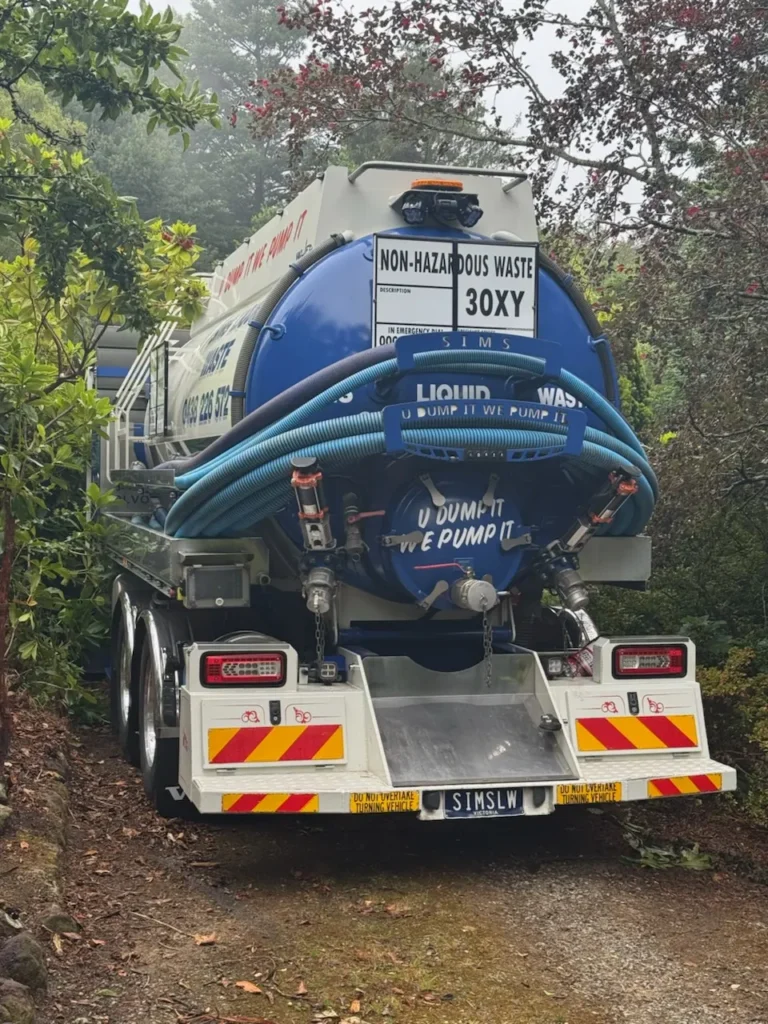
We’re a family business from Kyneton, started by Peter Sims in 1988, and grease traps are a regular part of our week. You deal with the same small team every time, not a call centre. We know the difference between a Greater Western Water agreement and a Yarra Valley Water one, and we keep your records straight for both. If something goes wrong at 2am on a Saturday, we answer.
- Family business, started by Peter Sims in 1988
- Based in Kyneton, working from Castlemaine to Melbourne
- Licensed and EPA certified
- 24/7 emergency service
- No-mess guarantee on every job
- 30+ five-star Google reviews
- Trusted by thousands of local customers
What Our Customers Say
"Adam cleaned out my grease trap like no one else. Clearly an expert. Great service, would recommend."
 Jack Kernan
Google Review
"Adam is an absolute legend! He has helped out on many jobs that had been undertaken by himself quickly & effectively even when problems have arose. Fantastic bloke, honest, trustworthy & always willing to help out where he can, no matter if you are a contractor or owner he will direct you with the right information."
Ryan Barassi
Google Review
"Highly recommend Sims. Adam was prompt, informative, thorough and extremely personable. Sims is firmly on my list of trusted trades and services."
Philosophoenix
Google Review
Melbourne Grease Trap Questions
How often should a commercial grease trap be pumped out in Melbourne?
As often as your trade waste agreement says. Greater Western Water says traps are typically pumped every three months, but busy kitchens are often set more often. Yarra Valley Water sets the frequency in each agreement and reviews it at renewal. If your trap is full before the due date, pump it early.
Which water authority sets my grease trap rules?
It depends on your suburb. Greater Western Water covers most of the west and north-west, including Sunbury, Melton, Essendon, Moonee Ponds and Sunshine. Yarra Valley Water covers Broadmeadows and Craigieburn. Tullamarine is split between the two. Your water bill shows which authority you're with.
Do you send my pump-out record to the water authority?
Yes. If you're with Greater Western Water, we notify GWW of every pump out for you, so you don't need to send dockets yourself. You also get an EPA waste certificate for your own file. Yarra Valley Water customers should keep those certificates, because its inspectors can ask to see receipts.
Can you clean our grease trap outside trading hours?
Yes. We work early mornings, late evenings and overnight so the truck and hose aren't in the way of customers or staff. Tell us when your kitchen is quietest and we'll book around it. After-hours visits can cost more than daytime ones, and we'll tell you the difference before booking.
Do you clean residential grease traps?
Yes. Some homes have a small grease trap, usually because of a large kitchen, a home food business or an older plumbing setup. They need emptying far less often than a commercial trap, but they still fill up. Call us if the kitchen sink drains slowly or the trap starts to smell.
How do I find out what size my grease trap is?
Check your trade waste agreement or consent first, because it usually lists the trap size in litres. The installer's paperwork or the trap lid may also show it. If you can't find it, tell us what kind of business you run and where the trap is, and we'll measure it on the first visit.
What should I do if my grease trap is overflowing?
Stop putting water down the kitchen drains and call us on 0438 226 572. We're on call 24/7 for emergencies. An overflowing trap can push fat into the sewer and waste water back into your kitchen, so it's worth a same-day call rather than waiting for your next scheduled visit.
Do you also clean triple interceptors?
Yes. Triple interceptors are three-chamber pits used at workshops, wash bays and some industrial sites to separate oil and silt from waste water. Like grease traps, they need regular pump outs, and we're EPA licensed to carry triple interceptor waste. We can service both on one visit if you have both.
Can you service grease traps at several sites on one schedule?
Yes. If you run more than one venue across Melbourne's north and west, we can set up a single schedule that covers every site at the frequency each agreement requires. Grouping sites on the same run can also keep travel costs down.
What paperwork do I get after a grease trap pump out?
You get an EPA waste certificate showing the date, the waste removed and who carried it. The job is also logged with your water authority. Keep the certificate with your trade waste agreement, because inspectors from Yarra Valley Water or Greater Western Water can ask to see it.
Areas We Cover Around Melbourne
- Sunbury
- Melton
- Caroline Springs
- Taylors Lakes
- Sydenham
- Tullamarine
- Airport West
- Niddrie
- Essendon
- Moonee Ponds
- Sunshine
- Broadmeadows
- Craigieburn
About Sims Liquid Waste
Sims Liquid Waste is a family business started by Peter Sims in 1988. Adam Sims joined in 2006, and Toby, a qualified plumber, joined in 2024. We work from 685 Lauriston Road, Kyneton, and we're licensed and EPA certified. Call Adam on 0438 226 572.
Book a Grease Trap Pump Out
Call Adam on 0438 226 572 or send the form with your suburb, trap size and how often your agreement says it's due.